
Why you wake up at 3 a.m.
The science behind cortisol, body temperature, and overnight wake-ups.
- Published
- Updated
- Read
- 4 min
- Sources
- 3
In this story
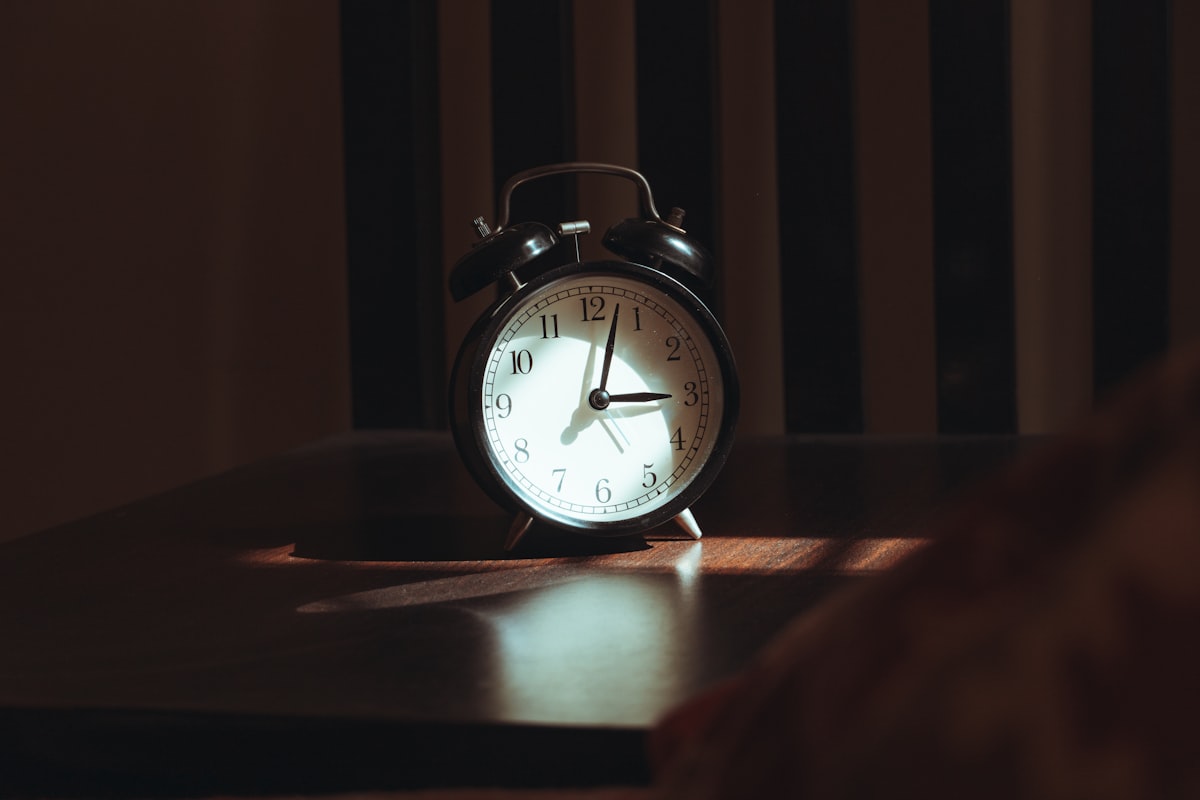
Waking in the small hours is one of the most commonly searched sleep complaints, and one of the most misread. It feels like something has gone wrong. In most cases the timing is a straightforward consequence of what your body is doing at that point in the night.
That does not make it pleasant. It does mean the useful question is not "why am I broken" but "what changes around 3 a.m., and which of those things can I influence."
Why it matters
Brief awakenings are a normal feature of sleep architecture. Most are never remembered. What turns a normal arousal into a memorable one is usually whether something keeps you up afterwards, and that is where both physiology and the room come in.
Understanding the mechanism also lowers the stakes. A lot of the difficulty of a 3 a.m. wake is the worry that accompanies it.
Cortisol is on its way up during the exact window people report waking. That is not a malfunction. It is the start of the morning program.
Breaking down the science
The night is not symmetrical
Deep sleep is concentrated in the first half of the night. By the second half your sleep is lighter and REM periods are getting longer, with the final REM period running up to an hour.[2]
Lighter sleep is easier to surface from. The same noise or the same warm room that you slept straight through at midnight is much more likely to wake you at 3 a.m., because the depth of sleep protecting you has changed.
Core temperature bottoms out and turns around
Core body temperature falls after sleep onset, reaches its lowest point in the early morning, and then begins climbing again hours before your alarm.[3] That turning point sits close to the window people tend to wake in.
A rising core temperature in a room that has also warmed overnight leaves the body with less capacity to shed heat, and thermal discomfort is a common cause of surfacing out of sleep. The room did not necessarily change. The body's tolerance did.
REM sleep makes waking more memorable
REM is when most vivid dreaming happens, and awakenings from REM are more likely to be remembered than awakenings from other stages. Because REM occupies progressively more of the later cycles, an arousal in the second half of the night is more likely to be one you recall in the morning.
This creates a reporting bias. People do not wake more often at 3 a.m. so much as they remember the 3 a.m. ones.
Stress changes the shape of the curve
Cortisol responds to stress on top of its daily rhythm. Under sustained pressure the overnight low is less pronounced, and the early-morning rise can begin sooner. The subjective experience is waking fully alert with a racing mind at an hour when neither is welcome.
This is also why the advice to simply relax is unhelpful. The alertness is hormonal and already underway by the time you notice it.
When it is worth raising with a doctor
Occasional awakenings, and even nightly brief ones you fall straight back from, sit inside the normal range. Persistent trouble returning to sleep, waking with breathlessness, gasping or choking, or daytime sleepiness that does not improve are different, and are worth discussing with a clinician. No article can assess that.
Try this tonight
- Keep the room cool, because a warm room is harder to tolerate in the early morning.
- If a noise tends to wake you late in the night, try a steady background sound.
- Remember that brief wakes are normal. The worry is often what keeps you up.
- If you wake gasping or choking, or stay sleepy all day, talk to a doctor.
This article is general education, not medical advice. If you are worried about your sleep, talk to a doctor.
Sources
- 1.Mohd Azmi NAS, Juliana N, Azmani S, et al. (2021). Cortisol on Circadian Rhythm and Its Effect on Cardiovascular System. International Journal of Environmental Research and Public Health, 18(2):676. Accessed Nov 5, 2026.
- 2.Patel AK, Reddy V, Araujo JF (n.d.). Physiology, Sleep Stages. StatPearls Publishing. Accessed Jul 2026.
- 3.Pacheco D, Sleep Foundation (updated 2025). The Best Temperature for Sleep. Sleep Foundation. Accessed Nov 5, 2026.
Continue reading
All stories
Why mornings feel so heavy
That foggy feeling after waking has a name. Here is what makes it worse, and what may ease it.
Circadian rhythms and sleep cycles
How circadian rhythms, sleep stages, and body temperature work together to shape the quality of a night.
Does stale bedroom air affect your sleep?
Eight hours in a closed room changes the air you breathe. A small study tested whether that matters.